
Technical Due Diligence for UK Software Buyers
Turn product, code, security, data, cloud and delivery evidence into a clearer acquisition decision and a practical post-deal plan.
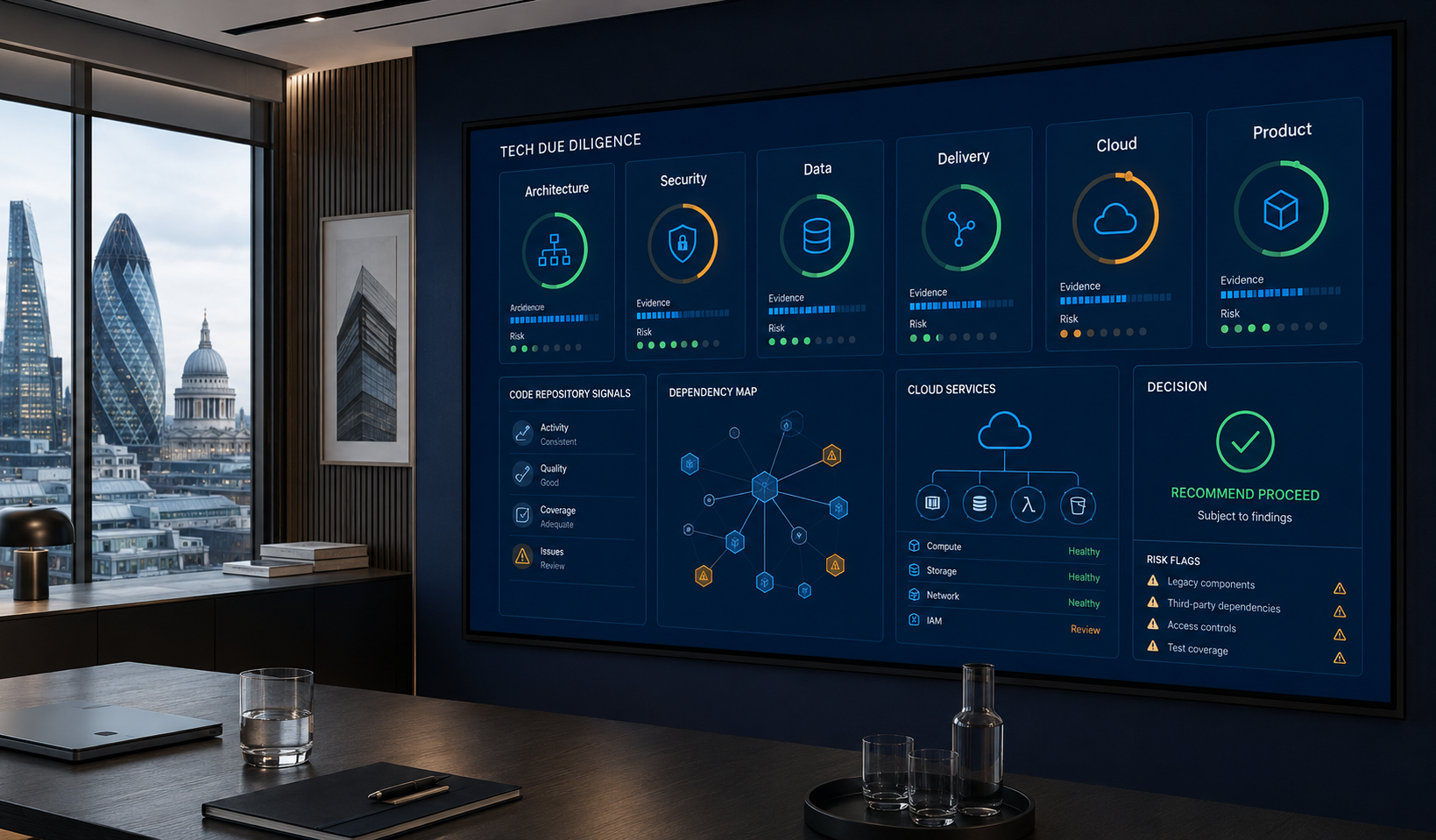
The direct answer
Technical due diligence gives a UK software buyer evidence about what is being acquired, which risks could weaken value, and what must happen after completion. Review product fit, architecture, code ownership, security, data obligations, cloud operations, delivery capability and costs; then translate findings into deal decisions, conditions, remediation priorities and a practical integration plan.
A useful review is not a long defect list. It explains which findings matter to revenue, customers, resilience, cost, timing and the buyer’s intended operating model. It also states what could not be verified, so confidence is not mistaken for certainty.
For UK deals, data and security deserve explicit workstreams. ICO guidance says a change of controller can make data sharing part of acquisition due diligence, including purpose, lawful basis, documentation, governance and security. Specialist legal, tax or regulatory advice may also be needed; a technical review does not replace it.
Six workstreams software buyers should examine
Product and customers
Test whether the product roadmap, customer promises, usage patterns and commercial priorities agree. Identify bespoke commitments or missing capabilities that could constrain the investment thesis.
Architecture and code
Review system boundaries, repositories, dependencies, build quality, technical debt, test evidence, documentation and intellectual-property provenance. Focus on material risk, not cosmetic code preferences.
Security and access
Examine identity, privileged access, vulnerabilities, incident history, secure development, third parties and recovery. Match review depth to the product's data and operational risk.
Data and privacy
Map important datasets, controllers, lawful use, quality, retention, transfers and customer obligations. The ICO says data sharing must form part of due diligence where a deal changes controllers.
Cloud and operations
Verify environments, ownership, observability, resilience, backup tests, vendor concentration and run costs. Establish what the buyer can actually operate from completion day.
Delivery and team
Assess knowledge concentration, engineering leadership, release practices, roadmap credibility and supplier dependencies. A strong product can still carry execution risk if critical knowledge is fragile.
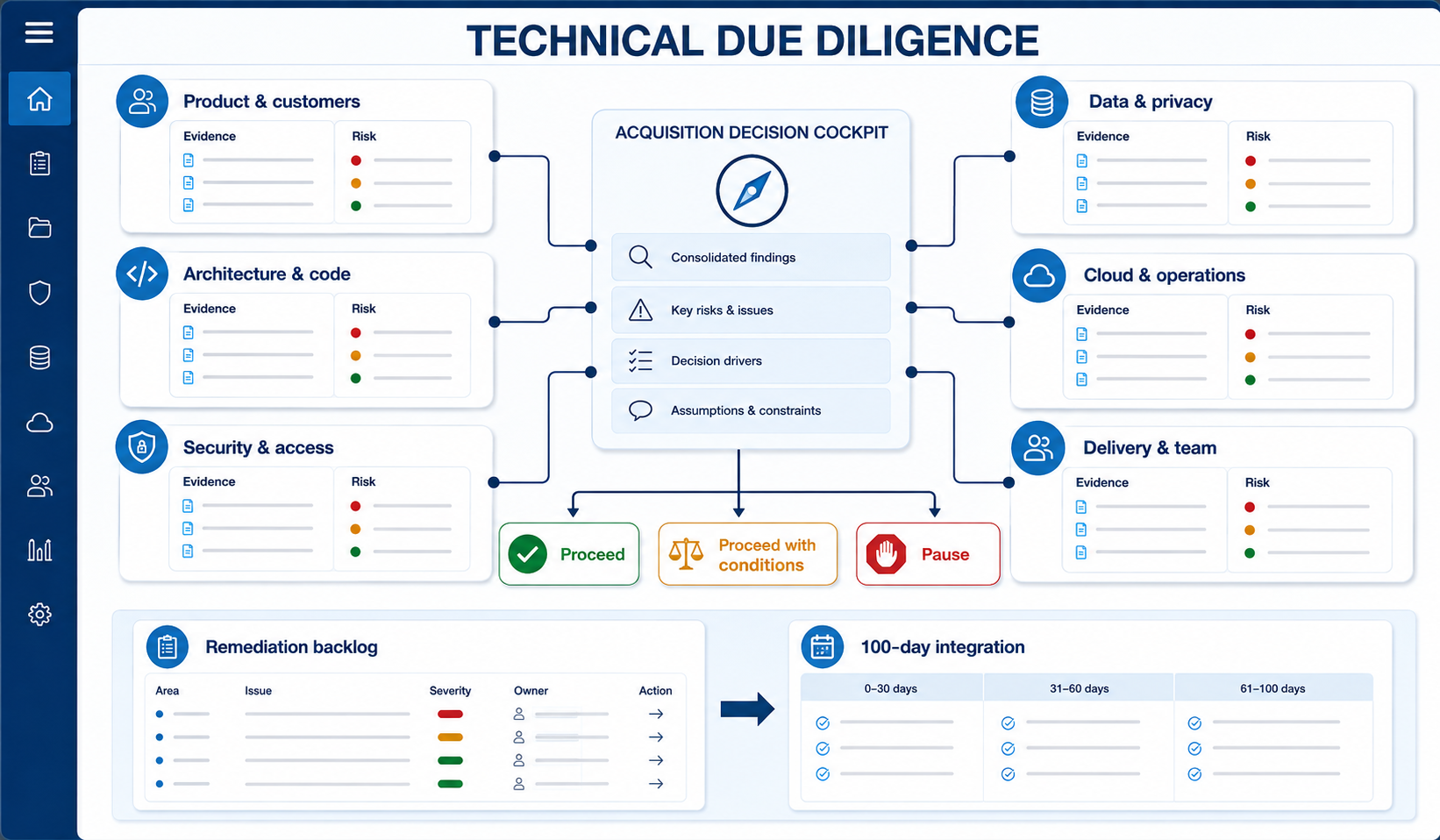
A decision-ready evidence pack
A four-step technical due diligence process
Scope should follow deal risk. Start with the buyer’s decisions, deepen where evidence changes value or integration feasibility, and keep an auditable line from finding to action.
Frame the deal questions
Translate the investment thesis, deal structure and integration assumptions into a focused evidence request and risk-based scope.
Inspect evidence and systems
Review documents, repositories, cloud and operational evidence; interview accountable leaders; and record access limits and unresolved assumptions.
Test findings commercially
Connect each material technical issue to customers, revenue, cost, timing, resilience, compliance or the feasibility of the buyer's plan.
Decide and mobilise
Separate blockers from conditions and remediable risks, then assign owners and sequence a realistic completion and 100-day integration plan.
Checklist review versus decision-grade diligence
| Area | Checklist-only review | Decision-grade due diligence |
|---|---|---|
| Scope | Generic request list applied to every deal | Questions tied to thesis, structure and integration plan |
| Evidence | Management statements and screenshots | Proportionate verification across systems, records and owners |
| Findings | Technical defects without commercial context | Material effects on customers, value, cost, timing and risk |
| Decision | Red/amber/green summary with little nuance | Proceed, condition, remediate or pause with stated confidence |
| After completion | Report archived after the deal | Owned remediation and 100-day integration workstreams |
Need a clearer view of the technology before you commit?
Forge Cloudify can run a focused software assessment, explain material findings in commercial language, and turn the result into practical remediation and integration priorities.
Frequently asked questions
What is technical due diligence in a software deal?
It is an evidence-led review of a software business or product before an acquisition, investment or major partnership. It tests whether the technology, team and operating model support the commercial story and identifies risks, dependencies and post-deal priorities.
What documents should a software seller prepare?
Typical evidence includes architecture diagrams, repository and deployment access, dependency inventories, cloud accounts, security policies, incident records, data maps, product roadmaps, team responsibilities, service metrics, major contracts and a clear list of third-party systems.
How is technical due diligence different from a security audit?
A security audit is one workstream. Technical due diligence also examines product fit, code and architecture, scalability, reliability, data, cloud cost, delivery capability, intellectual-property evidence, technical debt and the feasibility of integration or separation.
Can due diligence be completed without production access?
A useful first view can be formed from documents, interviews and demonstrations, but confidence is lower without proportionate access to repositories, environments, operational evidence and key technical staff. Access should be controlled and appropriate to the deal stage.
What should the final technical due diligence report include?
It should state the evidence reviewed, assumptions and access limits; explain material findings in commercial language; prioritise risks; distinguish deal blockers from remediable issues; and provide conditions, estimated workstreams and a practical post-deal plan.
Related services: Software Development, Cloud & DevOps, API & System Integration, AI Development, and All Forge Cloudify Services.